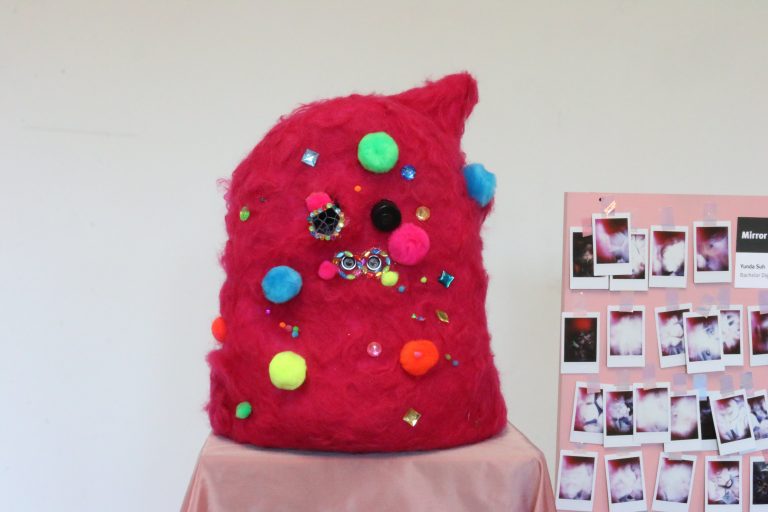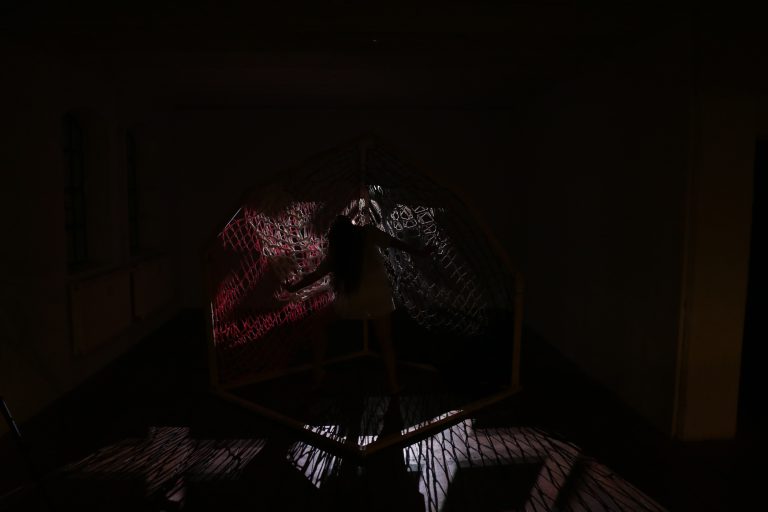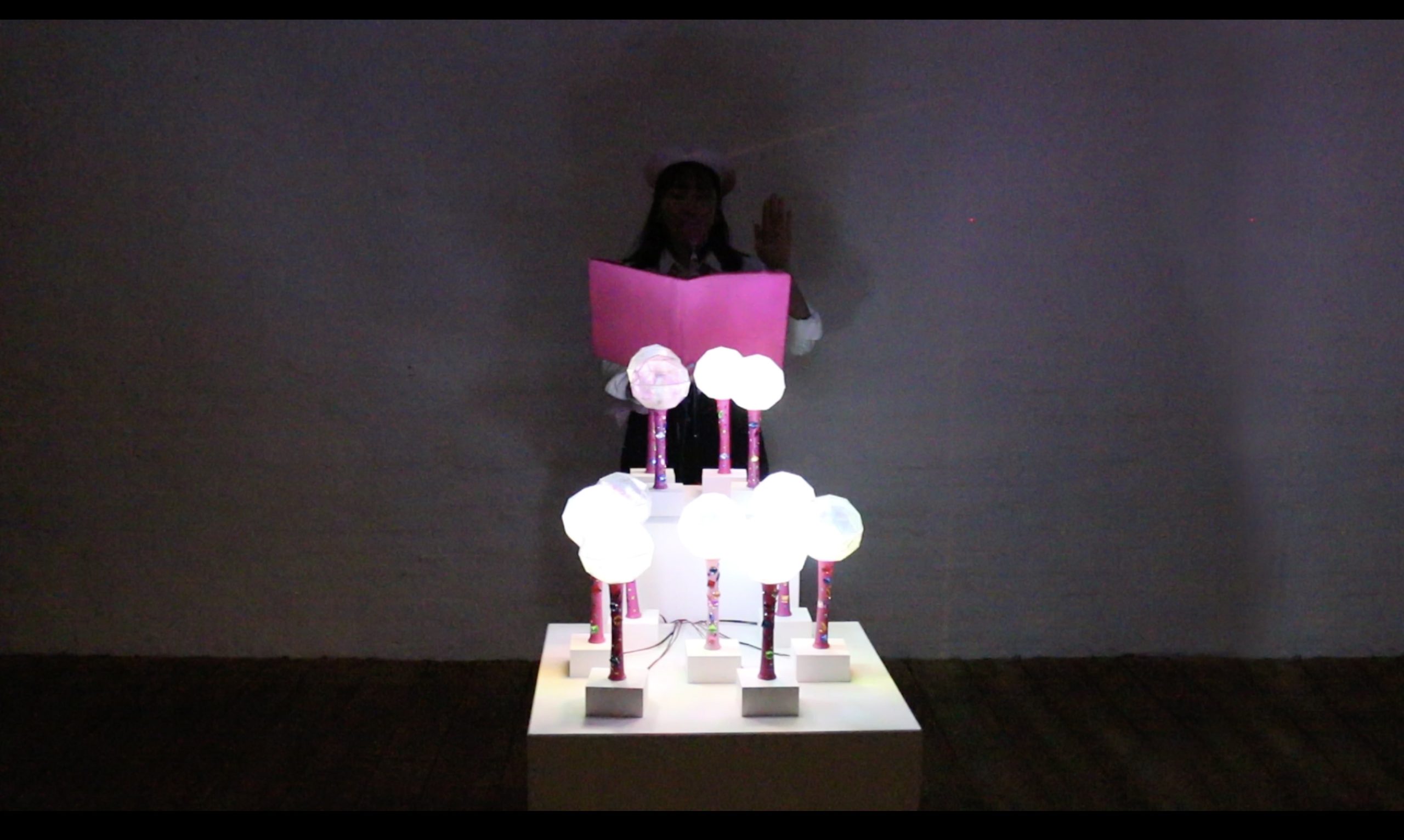




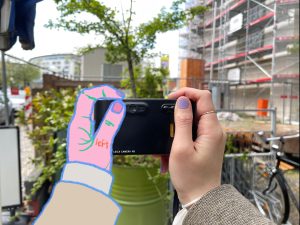
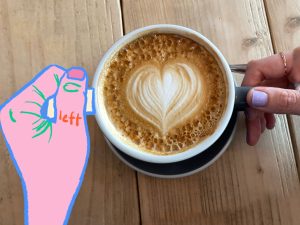
I have been interested in the study of minorities since I have studied media art. The first subject of the series of my research and works is the left-hander.
Some may say that the era of discrimination against the left-hander has long ended and in fact, being a left-hander is not at all a problem in the European society. However, the current society is still centered around the right-hander than the left-hander and the whole world is designed biasedly for the right-hander. In this study, my personal experiences of having been discriminated and the inconveniences I had to go through would be dealt.
I have installed the interactive works including the manifesto to display the baffling situations the minorities often encounter, which the majorities almost never experience in their every-day lives. The minorities become the non-mainstream and is therefore frequently alienated from the society. The work refers that the minorities try to suit to the social standards, hiding their various individualities because they are treated as being inferior people by the mainstream. The work was inspired by my personal experiences, moments when I took my difference as weakness, not as my unique charm because I was not brave enough to claim that discrimination on difference is not only unreasonable, but also intolerable.
Discrimination against the left-hander has existed for quite long throughout human history. In the European culture, the left-hander is not the subject social exclusion anymore, but it remains to be so in South Korea. In the 60s when my mother was still a child, the elders forced children to use their right hands instead of left by tying up the child’s left hand or locking him/her in dark storage rooms as a punishment for using the ‘wrong’ hand. As a result, this had a negative impact on children, causing them to stutter or to behave passively.
Gradually, as the new generations evolved, the society began to accept the left-hander as they were, and the number of the people using their left hands is said to be increasing. I, however, still face difficulties in my everyday life as a ‘lefty’- I’m still terrible at cutting out papers using scissors, and the camera shutter is too heavy for me.
Furthermore, some Korean elders ask me why I still am left-handed. Once, an elder rudely had asked me if I was an orphan, implying that if there was nobody to educate me to become a ‘righty’. Besides that, I often hear people ask out of surprise “Huh? Are you left-handed?” The reason, I think, people ask these questions is because they consider me “different”, or out of their standard even.
The world is full of differences – men, women, animals, plants, disabled people, bisexuals, homosexuals etc. How can one be deemed wrong, when really, they are just different? Why should the minority be oppressed? Why do these unique people feel difficult to be proud of themselves? Why do they strive to fit into the mainstream or the standard?
Sound is always accompanied by movement, which is energy. The minorities have problems revealing their movement and sound because they are different from the mainstream and is hence unrecognized. This study begins from the notion that I no longer wish to suit to the standards of the mainstream. From my works and performances, I choose to express my own characteristics without concealing them behind the social standards.
Minority can be defined as ‘a group (of people) whose number of characteristics, such as custom, race, religion, and ethnicity etc., is fewer than that of the main group. In today’s sociological context, minority refers to people who are treated relatively unfavorably and unfairly compared to the predominant group, only because they do not follow the set of rules the society has confirmed. The term, therefore, could also be used to indicate the social relationship between the ruling class and ruled class. Since members in the minority group are usually prone to get discriminated, the term ‘minority group’ can be used in discourse of civil rights and group rights5).